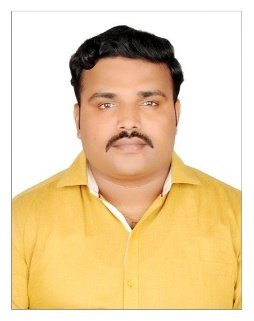
 Head of Department
Mr. Harish T S
Mr. Harish T S has been serving in this institute since 2014 as an Assistant Professor in the Department of Civil Engineering. He brings with him 14 years of teaching experience and 2 years of research experience. He completed his Bachelor of Engineering (B.E.) in Civil Engineering in 2010 and obtained his Master of Technology (M.Tech.) in Structural Engineering in 2012 from Bangalore Institute of Technology, Bengaluru. He is currently pursuing his Ph.D. in Civil Engineering from Visvesvaraya Technological University (VTU), Belagavi.
He has handled a wide range of Undergraduate (UG) subjects, including: Engineering Mechanics, Strength of Materials, Structural Analysis, Concrete Technology, Design of RCC Structures, Design of Steel Structures, Design of Prestressed Concrete Structures, Building Planning & Drawing, Surveying, Smart Urban Infrastructure, Quality Control & Quality Assurance, Building Materials Testing Lab, Technical Writing Skills, Problem Solving with PYTHON, Python Programming Lab for Civil Engineers and Introduction to Python Programming.
About the Department
Academic profile, good practices, vision, mission, PEOs, PSOs, and POs
1. Brief Profile of the Department
The Department of Civil Engineering at VKIT, established in 2013, is committed to imparting quality education through a team of highly qualified and experienced faculty. The department offers training in key domains such as Planning, Design, Construction, and Management, with a strong emphasis on core fundamentals, analytical thinking, and creative problem-solving in interdisciplinary contexts.
To support holistic student development, the department actively encourages participation in co-curricular and extra-curricular activities, fostering essential life skills such as teamwork, leadership, and organizational competence. These initiatives align with the institute’s mission to produce competent, industry-ready Civil engineering professionals.
2. Good Practices
The department implements structured pedagogical and mentoring practices:
- Students are actively involved in the final assessment process through presentations, viva voce, project demonstrations, and peer evaluations wherever applicable.
- Mentoring sessions are held regularly to guide students on academics, career planning, and personal issues with faculty mentors assigned to small groups.
- Remedial classes are conducted for academically weaker students to strengthen basics and bridge learning gaps beyond regular hours.
- ICT-enabled teaching promoted through Google Classroom and multimedia tools. Recorded lectures and lab sessions uploaded to department’s YouTube channel for self-paced learning.
- Regular organization of expert lectures, field visits, and hands-on training sessions providing real-world exposure to civil engineering practices.
- Regular Parent-Teacher Meetings to discuss students' progress, attendance, and behavior to strengthen the parent-teacher-institute relationship.
- Encouraging students to take up NPTEL courses to enhance technical skills with continuous faculty guidance and support.
3. Vision
"An outstanding knowledge dissemination centre through cutting edge technology to produce globally acceptable, competent Civil Engineers who will be in the forefront of planning, designing and executing Civil Engineering innovations for the benefit of mankind"
Mission
"Providing continuous teaching, learning, research, Professionalism and ethics to students through committed faculty, state of the art infrastructure, student industry interactions and co-curricular activities to create dedicated, committed, technically sound and environmentally conscious Civil Engineers"
4. Program Educational Objectives (PEOs)
To take up challenge professional roles successfully in industry, government and private sector.
To involve in search and higher education with zeal for lifelong learning.
To exhibit leadership in multi-disciplinary and societal engineering initiatives.
5. Program Specific Outcomes (PSOs)
PSO 1: Sustainable Structural Design
The graduates will have the ability to plan, analyse, design, execute and maintain cost effective civil engineering structures without over exploitation of natural resources.
PSO 2: Employment & Sustainable Society
The graduates of civil engineering program will have the ability to take up employment, entrepreneurship, research and development for sustainable civil society.
PSO 3: Professional Growth & Leadership
The graduates will be able to pursue opportunities for personal and professional growth, higher studies, demonstrate leadership skills and engage in lifelong learning by active participation in the civil engineering profession.
PSO 4: Professional Integrity & Ethics
The graduates will be able to demonstrate professional integrity and an appreciation of ethical, environmental, regulatory and issues related to civil engineering projects.
Program Outcomes (POs - 11 NBA Framework Outcomes)
NBA Framework • 11 POsApply the knowledge of mathematics, natural science, computing, and engineering fundamentals and an engineering specialisation to the solution of complex engineering problems.
Identify, formulate, and analyse complex engineering problems, reaching substantiated conclusions with consideration for the holistic nature of the problem.
Design creative solutions for complex engineering problems and design systems, components, or processes to meet identified needs — with consideration for public health and safety, and cultural, societal, and environmental factors. Sustainability is now intrinsic to design.
Conduct investigations of complex engineering problems using research-based knowledge and research methods, including design of experiments, analysis and interpretation of data, and synthesis of information to provide valid conclusions.
Create, select, and apply appropriate techniques, resources, and modern engineering and IT tools, including prediction and modelling — recognising their limitations — to solve complex engineering problems.
Analyse and evaluate societal and environmental aspects while solving complex engineering problems, considering their impact on sustainability with reference to economy, health, safety, legal frameworks, culture, and the environment.
Apply ethical principles and commit to professional ethics, human values, diversity, and inclusion; and adhere to relevant national and international laws.
Function effectively as a member or a leader in diverse teams, and be competent to carry out multidisciplinary tasks.
Communicate effectively and inclusively within the engineering community and with society at large — comprehending and writing effective reports and design documentation, and making effective presentations — considering cultural, language, and learning differences.
Apply knowledge and understanding of engineering management principles and economic decision-making, and apply these to one's own work, as a member and leader in a team, to manage projects in multi-disciplinary environments.
Recognise the need for, and have the preparation and ability for, independent and life-long learning, adaptability to new and emerging technologies, and critical thinking in the broadest context of technological change.
Staff Details
Teaching faculty members and laboratory technical support staff
Teaching Staff (4 Members)
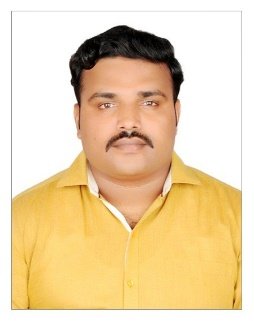
Harish T.S
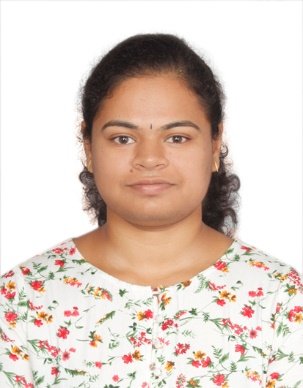
Pavithra S

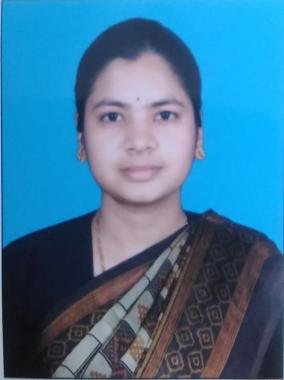
Non-Teaching Staff (3 Members)
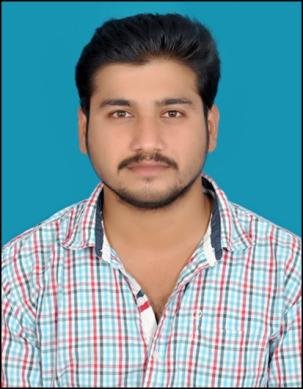
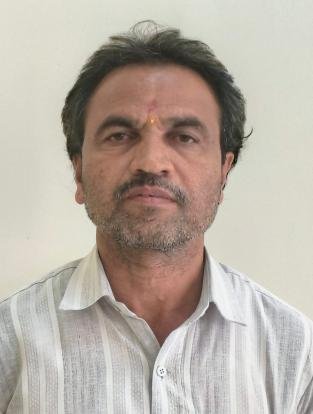
Shivappa H T

Rajamudi B P
Infrastructure & Key Highlights
Department facilities, computational software, research achievements, and professional affiliations
ICT & YouTube Channel
Google Classroom enabled learning where recorded lectures and demonstration sessions are systematically uploaded to the department’s YouTube channel for self-paced student revision.
Software Application Lab
Equipped with AutoCAD, STAAD.Pro, and Python programming workstations for structural analysis, building modeling, and computational civil engineering problem-solving.
KSCST Best Project Award
Best Project of the Year under the 44th KSCST Student Project Programme (SPP) for the research project "Unfired Soil Bricks Admixed with Coconut Coir and Waste Glass".
Professional Affiliations
- Member - International Association of Engineers (IAENG) [Membership No. 216675]
- Life Member - Indian Society for Technical Education (ISTE) [LM 125688]
- Life Member - Association of Consulting Civil Engineers (India) [6563L]
- Life Member - Institute for Research Development and Training of Construction Trades and Management (INSTRUCT) [LM 698]
Department Research Interests
- Structural Engineering & Earthquake-Resistant Modeling
- Alternative & Low-Carbon Building Materials
- Sustainable Practices in Concrete Technology
- Nano Materials & Eco-friendly Geo-polymer Binders
Laboratories (7 Official Facilities)
Comprehensive experimental and computing laboratories equipped in the department
1. Environment Engineering Lab
Equipped for comprehensive environmental water and wastewater quality testing. Key equipment includes BOD incubators, COD digester apparatus, turbidity meters, spectrophotometers, jar test setups, and pH meters.
2. Fluid Mechanics & Hydraulics Lab
Features hydraulic testing benches, Bernoulli’s theorem demonstration units, pipe friction loss setups, Orifice meters, Venturimeters, rectangular and V-notches, Pelton wheel turbine, and Francis turbine test rigs.
3. Geotechnical Engineering Lab
Equipped for soil mechanics characterization including Direct Shear test apparatus, Triaxial cell, Unconfined Compressive Strength (UCS) tester, Standard Proctor compaction apparatus, Casagrande liquid limit, and permeameters.
4. Concrete & Highway Materials Lab
Equipped with 2000 kN Compression Testing Machine (CTM), slump test apparatus, Vee-Bee consistometer, compaction factor test, Los Angeles abrasion machine, aggregate impact tester, and Marshall stability test apparatus.
5. Geology Lab
Contains representative suites of mineral and rock specimens (igneous, sedimentary, and metamorphic), petrological microscopes, crystal models, geological strike-and-dip compasses, and structural geological maps.
6. Surveying Practice Lab
Equipped with Electronic Total Stations, Digital Theodolites, Auto Levels, Prismatic Compasses, Plane Table sets, Dumpy Levels, metric chains, leveling staves, and handheld GPS receivers for field boundary survey and contour mapping.
7. CAD Lab / Software Application Lab
Equipped with modern PC workstations loaded with industry-standard design tools including AutoCAD for drafting, STAAD.Pro for structural finite element analysis, Python Programming for civil engineering numerical computations, and construction scheduling software.
Department Developmental Goals
Strategic short-term and long-term milestones for institutional excellence
7. Short-Term Goals
- Improve student admissions to the Civil Engineering program at VKIT.
- Strengthen institution-level placement activities with focused efforts for Civil Engineering students.
- Encourage and support faculty involvement in research and consultancy activities.
Long-Term Goals
- Expand the department by introducing Postgraduate (PG) and Ph.D. programs in Civil Engineering.
- Develop additional infrastructure, including buildings and advanced equipment, to support high-quality research activities.
- Achieve NBA accreditation for the Civil Engineering program.
- Encourage faculty to undertake funded research projects from national and international agencies.
- Promote the organization of National and International seminars, workshops, and conferences by faculty members to enhance academic engagement and visibility.